Wednesday, 21 October 2015
Medicinal yard weed
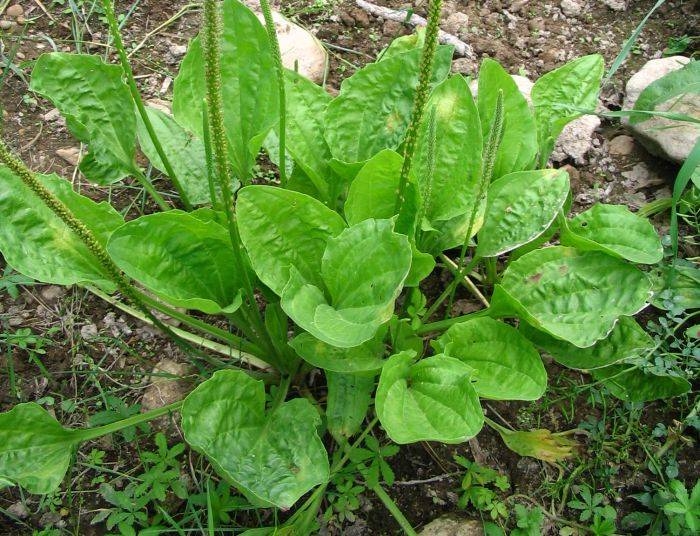
Plantago major is a species of plantago, family Plantaginaceae. The active chemical constituents are aucubin (an anti-microbial agent), allantoin (which stimulates cellular growth and tissue regeneration), and mucilage (which reduces pain and discomfort). Broadleaf plantain is also a highly nutritious wild edible, that is high in calcium and vitamins A, C, and K. The young, tender leaves can be eaten raw.
A tea of plantain leaves can be ingested to treat diarrhea or dysentery. Adding fresh plantain seeds or flower heads to a tea will act as an effective lubricating and bulking laxative and soothe raw, sore throats. When ingested, the aucubin in plantain leaves leads to increased uric acid excretion from the kidneys. Anti-inflammatory, analgesic, antioxidant, weak antibiotic, immuno modulating and antiulcerogenic activity.
Tuesday, 20 October 2015
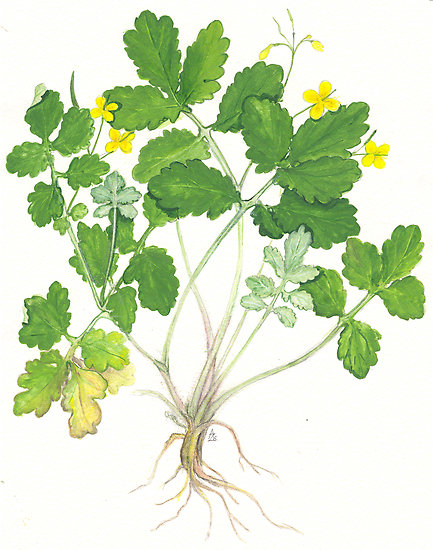
Chelidonium majus
,... commonly known as greater celandine or tetterwort, a herbaceous perennial plant, the only species in the genus Chelidonium.
The flowers consist of four yellow petals, each about 1 cm long, with two sepals. A double-flowered variety occurs naturally. The flowers appear from late spring to summer.
The whole plant is toxic in moderate doses as it contains a range of isoquinoline alkaloids but there are numerous therapeutic uses when used at the correct dosage. The main alkaloid present in the herb and root is coptisine. Other alkaloids present include methyl 2'-(7,8-dihydrosanguinarine-8 yl)acetate, allocryptopine, stylopine, protopine, norchelidonine, berberine, chelidonine, sanguinarine,chelerythrine, and 8-hydroxydihydrosanguinarine.
The chemicals in greater celandine might slow the growth of cancer cells.
The flowers consist of four yellow petals, each about 1 cm long, with two sepals. A double-flowered variety occurs naturally. The flowers appear from late spring to summer.
The whole plant is toxic in moderate doses as it contains a range of isoquinoline alkaloids but there are numerous therapeutic uses when used at the correct dosage. The main alkaloid present in the herb and root is coptisine. Other alkaloids present include methyl 2'-(7,8-dihydrosanguinarine-8 yl)acetate, allocryptopine, stylopine, protopine, norchelidonine, berberine, chelidonine, sanguinarine,chelerythrine, and 8-hydroxydihydrosanguinarine.
Friday, 16 October 2015
By Edmund Spenser
Friday, 26 June 2015
Flamboyant trees
Delonix regia is a species of flowering plant in the family Fabaceae. It is noted for its fern-like leaves and flamboyant display of flowers. In many tropical parts of the world it is grown as an ornamental tree and in English it is given the name Royal Poinciana or Flamboyant. It is also one of several trees known as Flame tree.
In India it is known as Gulmohar in Hindi. It is also known there as Krishnachura
The Delonix Regia is found in Madagascar's dry deciduous forests. In the wild it is endangered, but it is widely cultivated elsewhere. In addition to its ornamental value, it is also a useful shade tree in tropical conditions, because it usually grows to a modest height (mostly 5 meters, but it can reach an maximum height of 12 meters) but spreads widely, and its dense foliage provides full shade.Friday, 19 June 2015
The Way of Tea
Friday, 15 May 2015
Le baiser de l'hôtel de ville
In 1950 Robert Doisneau created his most recognizable work for Life – Le baiser de l'hôtel de ville (Kiss by the Hôtel de Ville), a photograph of a couple kissing in the busy streets of Paris. The identity of the couple remained a mystery until 1992.
The couple in Le baiser were Françoise Delbart, 20, and Jacques Carteaud, 23, both aspiring actors. The photograph was published in the 12 June 1950, issue of Life. The relationship between Delbart and Carteaud only lasted for nine months. Delbart continued her acting career, but Carteaud gave up acting to become a wine producer.
Subscribe to:
Posts (Atom)